
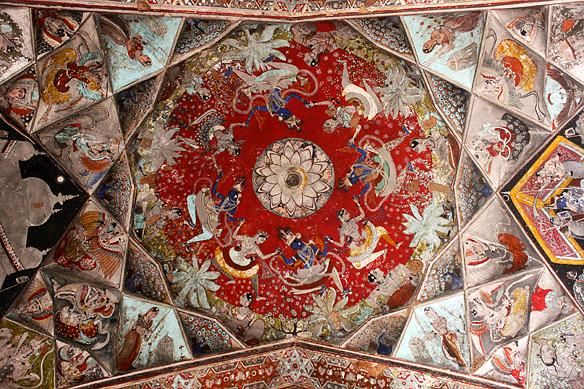
This place is etched in my memory as one of the most beautiful and awe inspiring forts i have ever visited. All owing to its magnitude, grandeur and especially for me, the paintings.
The fort has Huge moats, palaces, jails, cannons, etc. But most of all, it is known for the beautiful Bundi school of art that narrates age old stories. This post will take you through a visual ride of the paintings and the stories that they express.
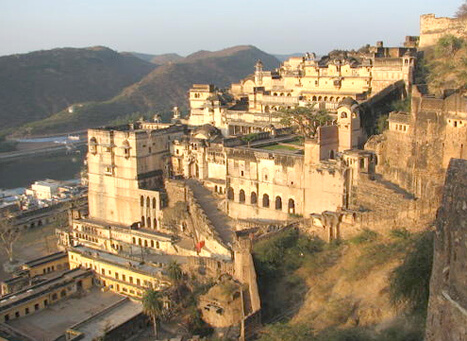
The fort has been built partwise from the 14th to the 18th century. It has been vacated recently, as the last king resided there and held court until 1977. It is fascinating to think of the King on a throne with his courtiers, and the queens in their majestic rooms in a royal attire, still existed half a century ago.
I present the highlights of the paintings and stories of Garh palace. We spent a day and a half in there but could cover less than one third of the paintings in detail. We had an amazing guide who brought life to the artworks through his knowledge. ” I have been visiting this place since 15 years”, he said, “but everytime I come here, I discover something anew”. Such is the beauty of this place.
Chattar Mahal
The first room of paintings we visited was the new diwan-i-khas (hall of private audiences) of the Chattar Mahal built by Rao Chattar sal.
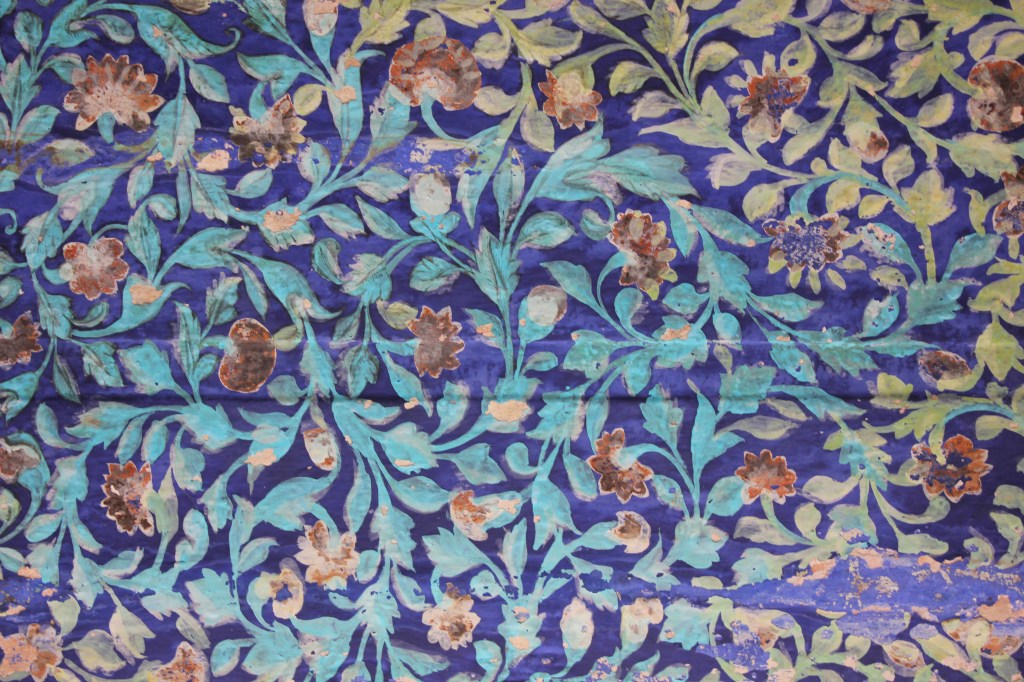
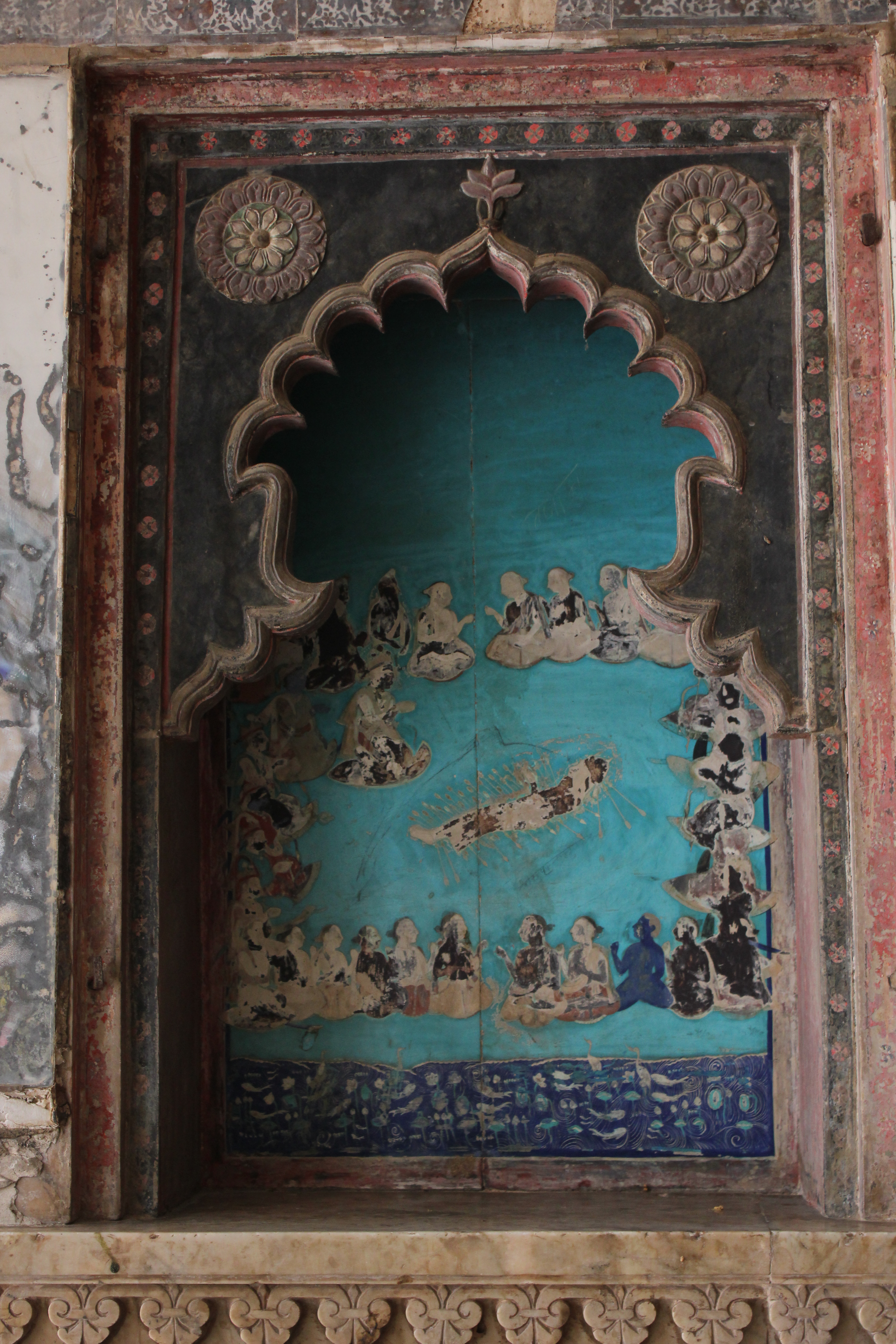
We were welcomed by a brightly coloured decorative indigo ceiling. As we went inside, there were dressing rooms and bedrooms, enveloped in paintings and music. These paintings are called Ragamalas. They are unique, because they portray Indian ragas and music through visuals and colour. Imagine depicting a tune that embodies a certain mood through the form of painting.
What are ragas?
In India, there are over 300 ragas. Just like each color has a unique hue, each raga has a unique sound. These sounds are created by the 7 notes of Indian music. Sa, Re, Ga, ma, pa, dha, Ni, Sa. Variations in the seven notes create varying ragas and moods.
The need to depict music in paintings
In Indian tradition, music is considered language of the impersonal and hence a symbolic medium. The visioners of Ragas felt within themselves the necessity of personifying the intangible. Thus the invisible Ragas became visible in material forms. In the Ragamala miniature paintings various pictorial elements depicted have a symbolic meaning.
Seasons, ragas, poetry and paintings.
An important influence over Bundi paintings, is the Barahmasa or 12 months. These 12 months bring about the seasons. And seasons control our emotions and lives. The ragas are assigned a particular time of the day and a season to be sung in. The ragmala paintings showcased these seasons along with the ragas through nature, animals, plants and colours, which further aided in communicating the mood. Having learnt Indian Classical music, I could feel the vibrations of the music depicted in the painting. It was a unique amalgamation of art and classical music.
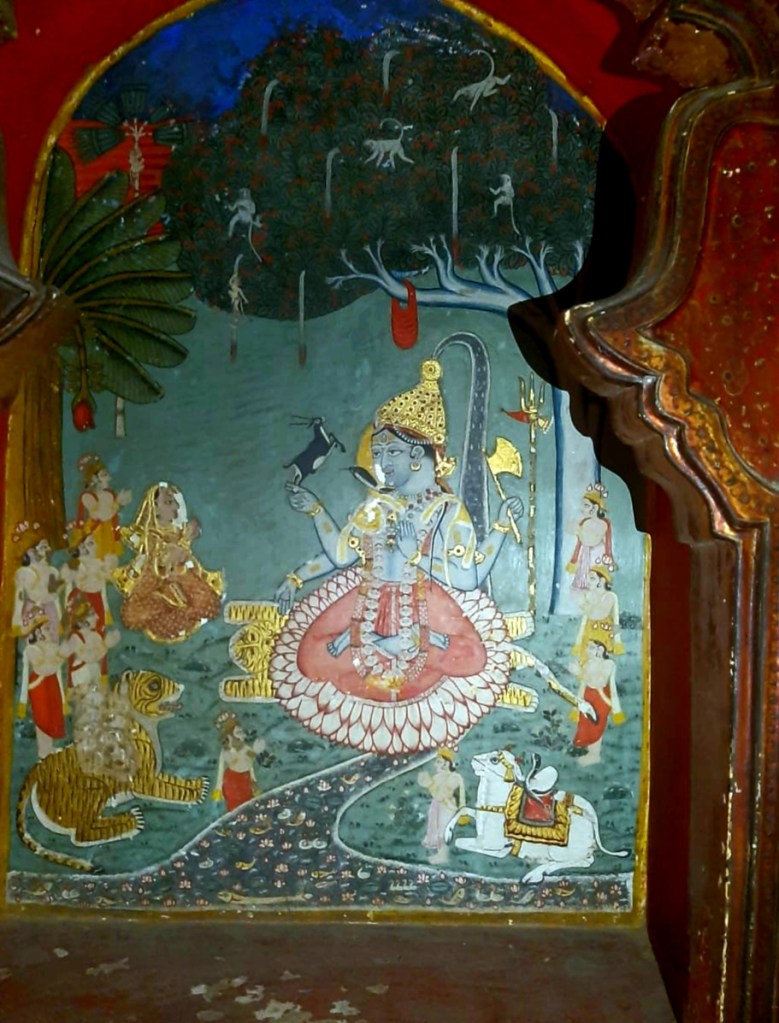
Ragmala Paintings in Chattar Mahal , Bundi Palace
The painting above depicts raag Bhairava, through the portrayal of lord Shiva. Raag Bhairava was born of the mouth of Shiva, and has the notes of Dha, Ni, Sa, Ga, Ma. it is to be sung in the morning on an autumn day. The colours and elements of nature capture this autumnal ambience and the mood of the Raga. Turqoise was commonly used to depict it. Also, the yellow areas in the paintings in this chamber were gold plated.
The story of Tansen
Tansen was an accomlished musician in the court of Akbar. Through his mastery over the ragas, he could bring about incredible changes. If he sang an evening raag during daytime, the sunlight would diminish. His talents made Akbar’s courtiers jealous. They convinced Akbar into making Tansen sing raag Deepak. They knew that if Tansen undertook the raag, it would create immense heat, such that the lamps nearby would burn unaided. The heat would also burn the great musician himself to ashes. Tansen realised this plan, and instructed his daughters to sing raag Megh malhar, which brings rain. While he sang raag deepak, and the diyas alighted, his daughters sang the raag of the rains. The clouds poured and Tansen’s life was saved. Such is the power of music as enumerated in Indian history.
Phool Mahal
The phool Mahal built in the 16th century is the older Diwan-i-Khas (Hall of private audiences). Beautiful mosaic adorns the pillars of this mahal. Few paintings could be documented, since the room was dark. Phool mahal is covered from ceiling to the floor with paintings, that impart lessons through its stories.
Lessons learnt
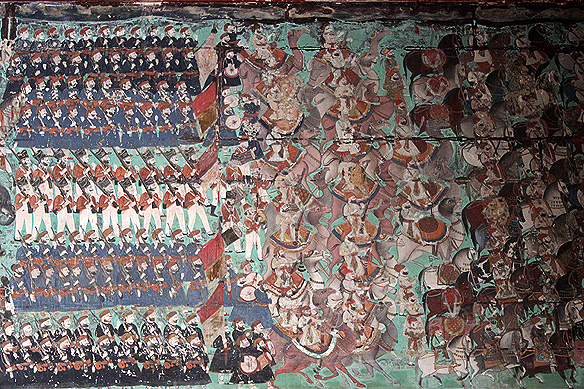
One of the paintings in Phool Mahal depicted a procession of a festival dedicated to lord Rangnathji. Numerous soldiers were painted on horseback and so were some british soldiers. But this painting of an important festival made no acknowledgemnt to the presence of a king. This was unlike any painting that always glorifies the king. The maharaja sure was present in this festival, but no special identity or attention was presented towards him. This was meant to be a lesson to the onlookers on the nature of god and king. The artist wishes to portray that everyone is equal in Gods eyes, including the head of state.
Badal mahal
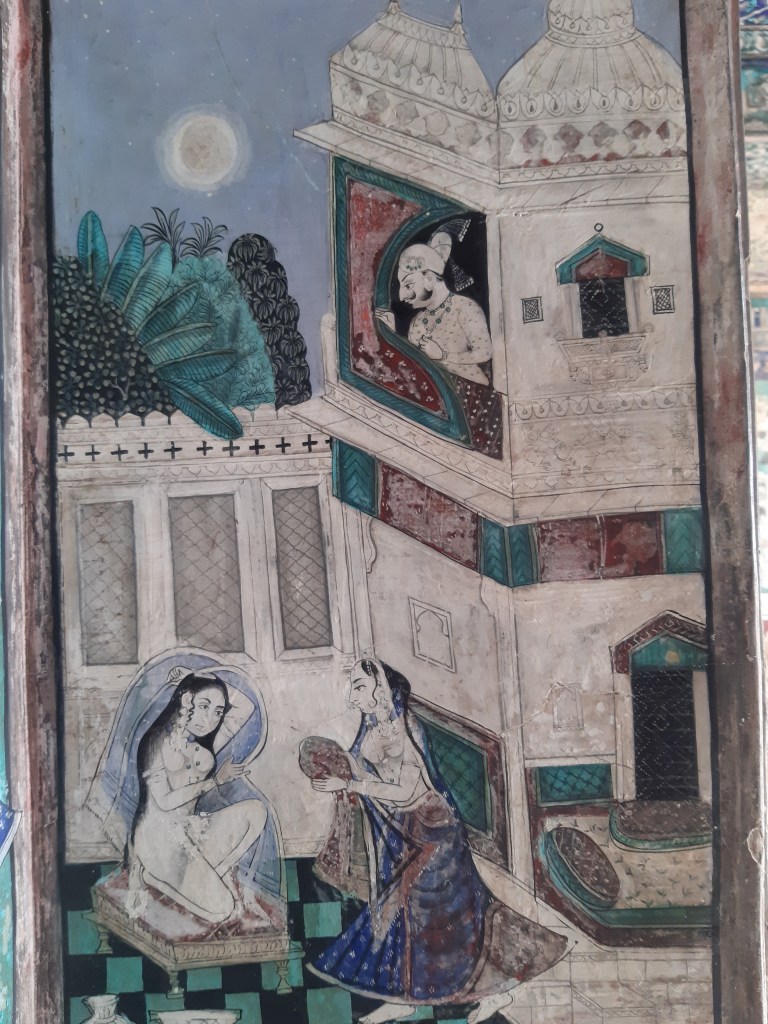
This is an enchanting place, with a platform and a royal space where the queens bathed during the rains. How luxurious it is, having a royal open space, where you can feel the cool water droplets from the sky. There is a small window above the badal mahal, from where the kings used to peek at the beautiful queens taking a bath. This has been depicted in a painting in Chitrashala.
Going inside the room of the Badal mahal, there were paintings in their best undisturbed form with bright colours. The ceiling, although painted, looked three dimensional. Awe inspiring paintings done as early as the 17th century!
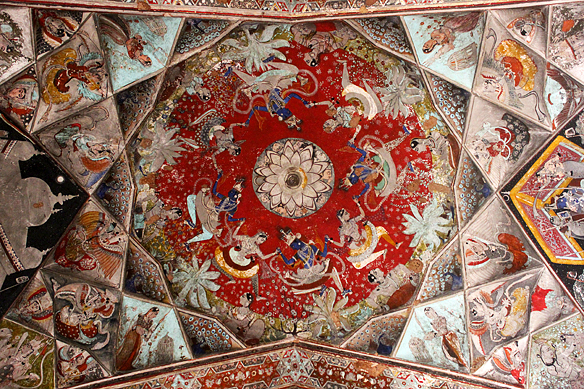
Curiously, these paintings were done by artists from Mongolia. As a result, they had applied their own unique take on the stories and scenes depicted. The eyes of the figures were characteristic of mongolian natives. the Pushpak vimana was depicted in a modernised manner. The flowers showered by the Gods during ras leela, were instead shown individually with a human in the centreof the petals. How creative!
A love story that led to war
Among the ruins of the paintings of Badal mahal is a story entwined, of Madhavanal and Kaamkandla.
|| It is in the court of Raja Kamsena, the king of Kamakya, the beautiful and skilled Kamkandala dances to the beats of the Tabla player. Madhavanal hears the performance from outside the courtroom and requests the guards to let him in, which they deny. He claims that the dancer is short of one ghungroo on one of her feet, while the Tabla player has no thumb. The guards relay the message to king Kamsena, who examines the facts, which turn out to be true. Impressed, he calls Madhavanal inside and invites him to play the tabla. While Madhavanal plays, Kamkandala dances, and a fly comes and sits upon Kamkandal’s body. She skillfully dismisses it without anyone noticing, except for Madhavnal. When the performance ends, king Kamsena being impressed with Madhavnal, presents to him a necklace. Madhavanal in turn gives it to Kamkandala, praising her skill. The king is furious and he forces Madhavanal to leave the kingdom. But Madhavanal and Kamkandla are in love, and they keep meeting secretly.
Madhavanal moves to Ujjain and performs in King Vikramaditya’s court. The King is impressed and he offers Madhavanal a boon. Madhavanal requests the King to free Kamkandala from Kamsena’s kingdom. King Vikramaditya first tests their love, and when satisfied, he decides to help Madhavanal. He sends a message to King Kamsen requesting him to free Kamkandla, but Kamsen refuses. A war brakes between King Vikramaditya and King Kamsen. Both are brave warriors and have special blessings from their Lords, Vikramaditya has Mahakal’s and Kamsen has Maa Vimla’s blessings. As a result Mahakal and Maa Vimla come to the battlefield. Looking at the consequences of the war, Lord Mahakal requested Maa Vimla to forgive king Vikramaditya and disappears after uniting Madhavanal and Kamkandla. It is this Maa Vimala who is residing as Maa Bamleshwari in Dongargarh. ||
The wars painted in the rooms were a reminder for the Kings and Princes to realise their duty and take utmost care for the defense of their kingdom. The paintings of Badal Mahal Phool Mahal and Chattar sal were a testimony to the geniuses and skilled artists of the past.
All things said, the true testimony to the expertise of our ancestors can be treaced in the Chitrashala. A landmark of beauty, that has sustained the harshness of time. Being the highlight of the fort, it attracts maximum tourists. The Chitrashala will be covered in my next blog. It is a world in itself and deserves certainly deserves this honour.
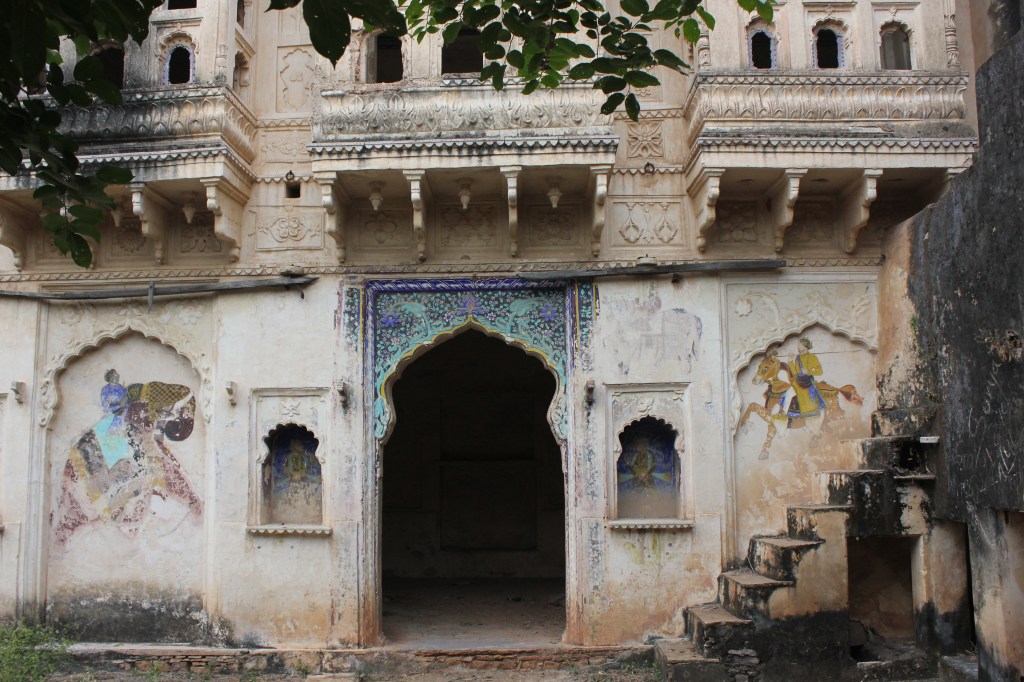
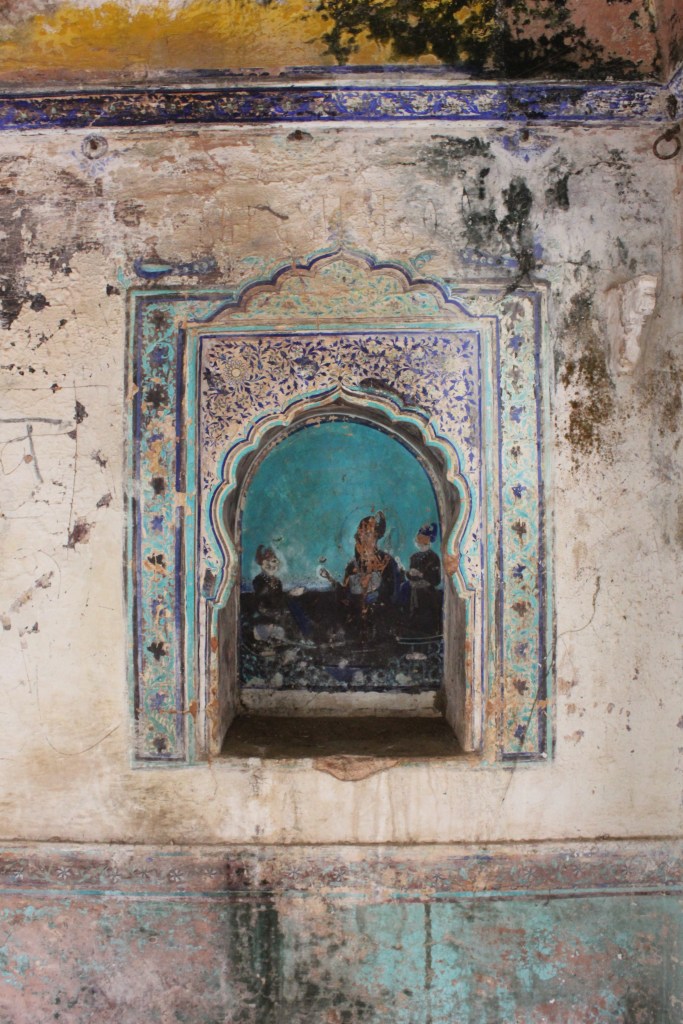
Apart from the beauty, splendor and the depth that the paintings exude, there are many spots that have succumbed to ruins in a short span of time. The palace needs more care and attention. It is high time that these treasures are recognized, respected and protected.
 Outlookin' life